

10.11.2026 19:00
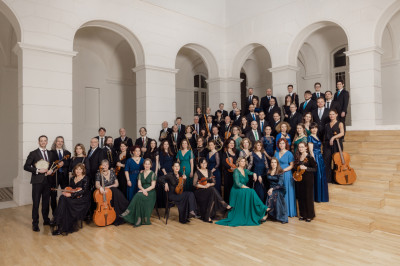
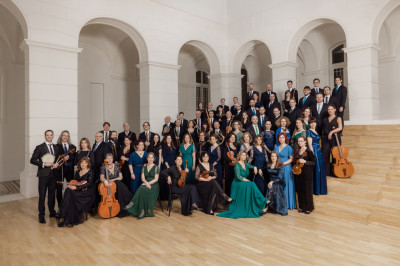
Franz Liszt Chamber Orchestra
Szeged, Szegedi Nemzeti Színház
Tisza Season Ticket - Szeged
Season tickets

Tickets can be purchased at the Filharmonia Hungary office in Szeged (Klauzál Sq. 7, Szeged; +36 62 425 260; szeged@filharmonia.hu), at Ticket Express box offices, at the venue before the concert, and online at www.jegymester.hu.
We offer a 10% discount for students and pensioners.
Subscribers of Filharmonia Hungary’s Tisza and Organ series are entitled to a 20% discount on tickets for concerts organized by Filharmonia Hungary in any city across the country. The discount applies to one ticket per subscription, per concert.
The individual discounts cannot be combined.
We reserve the right to change the programmes, dates, venues, and performances, and ticket prices may change accordingly.

Purchase a new subscription by November 10, 2026, valid until the first concert. Winners will be notified by email.
Subscriptions can be purchased at the Filharmonia Hungary office in Szeged (Klauzál Sq. 7, Szeged; +36 62 425 260; szeged@filharmonia.hu), at Ticket Express box offices, as well as online at www.jegymester.hu.
Subscribers of Filharmonia Hungary’s Tisza and Organ series are entitled to a 20% discount on tickets for concerts organized by Filharmonia Hungary in any city across the country. The discount applies to one ticket per subscription, per concert.
We reserve the right to change the programmes, dates, venues, and performances, and ticket prices may change accordingly.
Béla Bartók, Ernő Dohnányi, and Leó Weiner were almost exact contemporaries, and Ferenc Liszt served, in one way or another, as a model for all three of them. One question preoccupied each of them throughout their lives: how do earlier musical eras live on in the music of the present, and to what extent should a Hungarian composer sound Hungarian? The works heard in this concert can, in a sense, be understood as different answers to that question.
Bartók’s Romanian Folk Dances grew directly out of his folk-music collecting. They are a beautiful reflection of the way Bartók absorbed many different kinds of folk music, and how his modernity often lay precisely in his effort to preserve and present that music as faithfully as possible in its original form.
Dohnányi, by contrast, was very much an urban figure, with strong Western European ties from the beginning of his career. His youthful Serenade was premiered in Vienna, while the work itself was composed during a tour of London. Its musical language is far more closely related to the German Romantic tradition than to specifically Hungarian styles.
Weiner was even more of a city-dweller — for him, even an outer district of Budapest could seem like the distant countryside. For much of his life, he felt the pressure of a musical climate shaped by Bartók and Kodály, according to which a Hungarian composer was expected to write music that sounded unmistakably Hungarian. Although Weiner himself never collected folk songs, he composed a number of works rooted in folk traditions. His Divertimento No. 2 is essentially a sequence of folk-inspired dance movements, including the famous Fox Dance.
Bartók also wrote a Divertimento, but his was commissioned in Switzerland and composed there. In this work, the point of departure is not the musical world of the Carpathian Basin, but that of the Baroque concerto. Although the music is unmistakably Bartókian, it is also a tribute to earlier musical eras.
To conclude the programme, excerpts from Liszt’s Hungarian Rhapsodies will be heard. In many ways, they can be seen as early relatives of all the works on the programme: Hungarian in character, Romantic, virtuosic, and passionate.
Join us on a journey through eras and styles with some of the defining figures of Hungarian music.